For haiku, please visit Language Gallery. Thank you!

2009-03-09

>Roditis and Negoska wine, dashed Άνθος τ' όνειρό µου

Michael Psilakis, formerly of Onera ("Dreams", Όνειρα) on the Upper West Side, has been offering diners a somewhat unfamiliar concept of high-end Greek fare in the form of Anthos ("Flower", Άνθος) in Midtown West.

I had high hopes for this Greek restaurant, since I adore Greek food. In summary, it is sad to report that food here is no more special than the more reasonably priced casual fare at its cozy (Italian)
sister restaurant Mia Dona. However, you'll be all right as long as you remember that "Greek fine dining" is still an oxymoron. Also, be prepared not to be disappointed if they've run out of the braised lamb shank.

And my choice of wine soured the meal as well. I am really not a picky drinker, but the Greek wines,
Roditis/Moschifilero, Skouras, Peleponnese, 2007, "bright wine distinguished by its floral characteristics," and Negoska, Angels peak, Macedonia 2006, "rose wine with undertones of strawberry," were downright... awful.


2009-03-03

>bánh mì sandwich, cleaned up and ready for recession

Warning: for you foodie people in the know, there's nothing new here. This is
1) a public service announcement mostly for the folks on the East Coast
2) recession food idea #1
***
Have you ever declined something potentially good precisely
because it was too cheap?

For instance, you've looked down your nose at humble bánh mì/bánh mỳ sandwiches because they cost a mere 2 bucks?

Hygiene issues? Have you ever read a headline, "Man dies from bahn mi poisoning"?

When your wallet feels light, you'd still rather do a Subway sandwich? (Bleh.) You poor souls, please do try Lee's Sandwiches. It's a chain, a sanitized and modernized version of mom-and-pop-hole-in-the-wall Vietnamese shops.

Mind you, these are not as good as the real mom-and-pop-hole-in-the-wall stuff, some of which taste as good as anything anywhere costing ten times more. Still, a sandwich here is at least as good as one from Togo's at half the price.


Pictures are from a light dinner at Lee's in San Francisco's Tenderloin district. Read the numbers on the receipt. (Cream puffs are on another receipt, not pictured. And please excuse my bite. I had to try my dessert first.)

I don't feel poor yet (knocking on that wooden table!) but there's something wonderfully satisfying about a good cheap meal.

2009-02-18

>sambal terasi with Rijsttafel

Too bad the Clinton visit to Asia is mostly seen through the lens of the traditional media, where the world revolves around (is boxed in by??) terribly important issues such as nuclear proliferation, climate change, trade agreements, fight against terrorism and world peace.

It's not a bad thing that I often see Indonesia through the sentimental lens of memory. I can trigger it s
omewhat instantly with Bengawan solo, for instance.

I spent most of my teenage years in Singapore and its surrounding countries. Indonesia was a short hop across the straits. When soulful chants wafted from mosques, it mattered very little to me what religion the sounds signified. I was moved by their lyrical charm, just as I was with Gregorian or Tibetan chants. (I'm thankful my parents have never been religious.)

***
And of course, who would forget the tantalizing aroma of spices accompanied by red-hot equatorial heat?

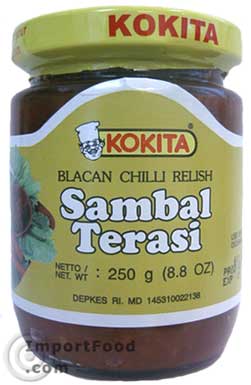
The most unforgettable pungency is that of terasi ("trassi"), dried shrimp paste, equivalent to Malaysian blacan/belacan. That and hot "cili" peppers.

If I want a shortcut to these flavors, bottled sambal terasi does the trick, I was later told in America. Just a tiny spoonful, it improves the flavor of any dish, a kind Chinese-Indonesian lady told me; y
es, try it in Dutch Rijsttafel dishes.

Alas, I have never been able to reproduce the feel of a grand tropical Rijsttafel feast. Even at Indonesian restaurants here. Perhaps you can't simply bottle the essence of a place and time.

In any case, I can still say, aku cinta kamu, Indonesia.

2008-12-30

>tomato daifuku トマト大福


I've always wondered about the kind of space the idea of "tomato" takes up in people's brains. Technically a berry, it is a rather ambiguous fruit. (Vegetable??) Whimsical yet grounded. I mean, would you name your bank "Tomato Bank" if it didn't sound practical? Possibly a bit of a fad at the moment, or possibly here to stay, tomato is a joyful presence everywhere, from confectionery to nabe. Viva tomato!

Great fortune series #4: トマト大福 (tomato daifuku) トマト = tomato 大福 = great fortune

>persimmon macaroon 柿マカロン kaki macaron


More teatime treats. Now, if you had something like persimmon macaroon, who'd need anything else? Here's a website where you can find some. (Their blueberry macaron looks yummy, too.)

"Le macaron est un petit gâteau granuleux et moelleux à la forme arrondie, d'environ 3 à 5 cm de diamètre, spécialité de plusieurs villes et régions françaises." - Macaron, Wikipedia

2008-12-28

>cold-smoked toro, mousseron, sauce gribiche, vadouvan...

The pleasant setting at Michelin-awarded (2 stars) Meadowood Napa Valley in St. Helena, complete with croquet-players in white, took me back to childhood idyll on mom and dad's golf courses. It was no Per Se, however. The restaurant was more comparable to Redd, at twice the price.
I believe I enjoyed myself a little too much - I apologize for forgetting to document this chef's tasting menu. I'll just let the pictures do the talking. As you can see, I didn't have a steady hand at the end of the meal.


2008-11-06

>the "common", the "ascetic", and the "unknown" dates

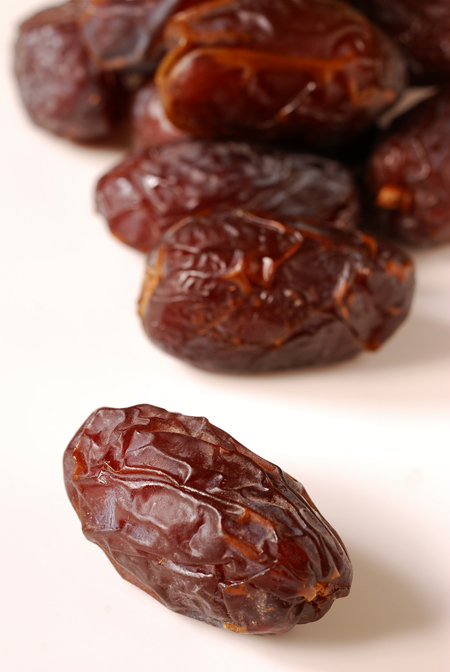
An offering of a wineglassful of Mujhoolah ("unknown") dates.

Plump and sweet, the gigantic medjools, courtesy of the chef, were greatly appreciated at the end of the meal, accompanied by mint tea, and roused thoughts of an Arabian bazaar بازار, of endless displays of dates (Phoenix dactylifera); sayer ("common"), zahidi ("ascetic"), ajwa (عجوة)... etc. etc.

Unexpected warmth flowed out of newly opened "Zaki Kabob House" on a forlorn stretch of San Pablo Avenue in Albany, California. No doubt it was a fast food location, I thought, but upon looking up, learned that this boxy space used to be "Taxi Brousse", a Senegalese restaurant until a few months ago. I happened to have a hankering for some tabouli (tabouleh? tabbouleh? تبولة‎;?) and baba ganoush (baba ghanoush? baba ghannouj? بابا غنوج?) so this place offering "delectable Mediterranean cuisine" was a perfectly timed discovery. "Zaki" apparently means "delicious".

A garrulous large chef personally greeted his customers, as did the other members of this congenial family. He reminded me of the jolly but fearsome butcher I saw somewhere near Rome. He wouldn't feel out of place in The Sopranos. (Turns out the family is Palestinian.)

Despite the graceless layout and its surroundings ("a new Whole Foods will be coming in across the street") the setting is somewhat softened with drapes and track lighting. We were given a "test menu" (halal), with generic kabob plates, "Jerusalem rotisserie chicken" plates, burgers and falafel wraps, "veggie lover plates". A delicious meal overall. I've decided not to pick on their hummus (houmous? humus? حمّص?) until I try it again, as the chef is planning an ambitious menu with special dishes (including an okra stew called bamya - did I just bury the lede?) and I plan to return.

2008-10-25

>"parent-child" bowl 親子丼 vs. "strangers" bowl 他人丼

What is oyakodon (親子丼)? This donburi dish comes with chicken and eggs. A family assembled in a bowl.

親 (parent) + 子 (child) +
丼 (bowl) = oyakodon

What is in tanindon (他人丼)? This donburi comes with meat (beef, pork...) and eggs, that is to say, strangers gathered in a bowl.

他 (other, third) + 人 (person) + 丼 (bowl) = tanindon

Don't like parents or strangers? You want to go simply eggy? Then 卵丼 it is.

卵 (egg) + 丼 (bowl) = tamagodon

Don't like bowls? Omuraisu, then - not tonight, though, brat.

2008-10-17

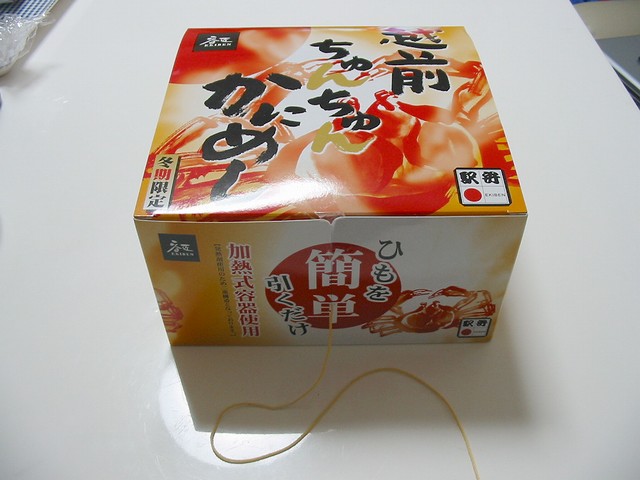
>self-heating train lunch box, ekiben, 加熱式駅弁

Self-heating cans existed during World War II. Quicklime added to water produces heat. Apparently its history goes further back, to the turn of the century pioneers.

In our time,
flameless chemical ration heaters appreciated by soldiers on the field are mostly ignored by pampered civilians living in office and home microwave cocoons. We don't need this portable source of heat in the kitchen.

A company which is trying to apply this ancient technology to our modern lives,
OnTech (Ontro), seems to be concentrating their efforts on beverage. Coffee, mostly, and it seems to me their effort is slightly misguided.

Think of a place where you'd need this convenience the most. Long hikes (not camping, necessarily - it is fun to fire up that little butane stove), long train rides. it's not too hard to carry a little hot thermos, and I don't mind cold drinks in any case.

It is still pretty neat to ponder, however, a self-heating lunch box.

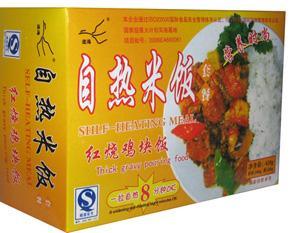
In Japan (and China - 自熱式, self-heating style), there are actually enough people on the trains for this convenience to be viable. And here they are, the self-heating meals, mistaken for a brand new technology, "latest invention" according to this WSJ.com video caption.

加熱式駅弁 (kanetsushiki ekiben) added heat style train station lunch box
過熱式駅弁 (kanetsushiki ekiben) superheating style train station lunch box


2008-10-14

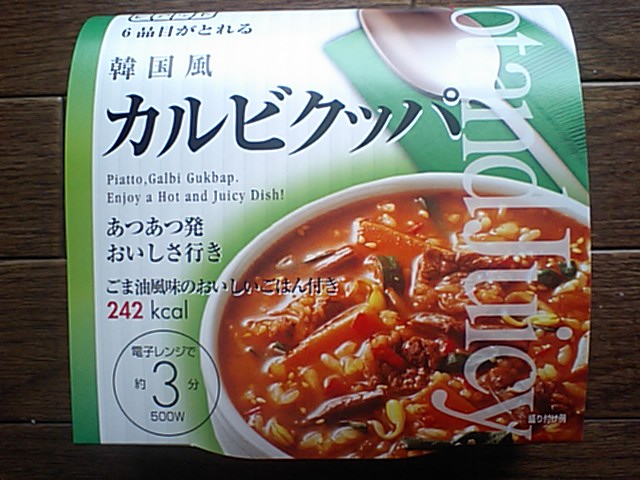
>a kuppa soup, クッパ, 국밥

Kuppa is a huge East Asian tradition.
Decidedly more generous than a mere cuppa,
as common as pizza and paella,
enjoyed in Japan by way of Korea,

this versatile dish has so far
eluded detection by savvy foodistas.


If you like a hearty bowl of soup/stew, see for yourself. Try googling kuppa (クッパ). You will find virtually nothing in English, but numerous entries are written for クッパ, and
the dish (料理) appears ahead of the Nintendo game character (ゲームキャラクター) Koopa, also written as クッパ.

It is sometimes called クッパスープ,
"kuppa soup", and there are hundreds of recipes online. (クッパのレシピ, クッパの作り方, etc.). 국밥 sounds like "cook bop" ("cook Bob"?), and might explain gukbap's relative obscurity, as opposed to, say, bibimbop♪(비빔밥, ビビンパ, bibinpa, bibimbap).

The dish means "soup rice", so naturally
rice is used in the stew instead of noodles. Beef (소머리국밥 and karubi kuppa, カルビクッパ) seems to be the meat of choice, but depending on regional origin, you may see pork (돼지국밥, デジクッパ) sausage (순대국밥, スンデクッパ) bean sprouts (콩나물국밥, 豆もやしクッパ) or tofu (두부국밥, 豆腐クッパ) featured as the main ingredient. Pictured right is a seaweed kuppa. (미역국밥, ワカメクッパ)

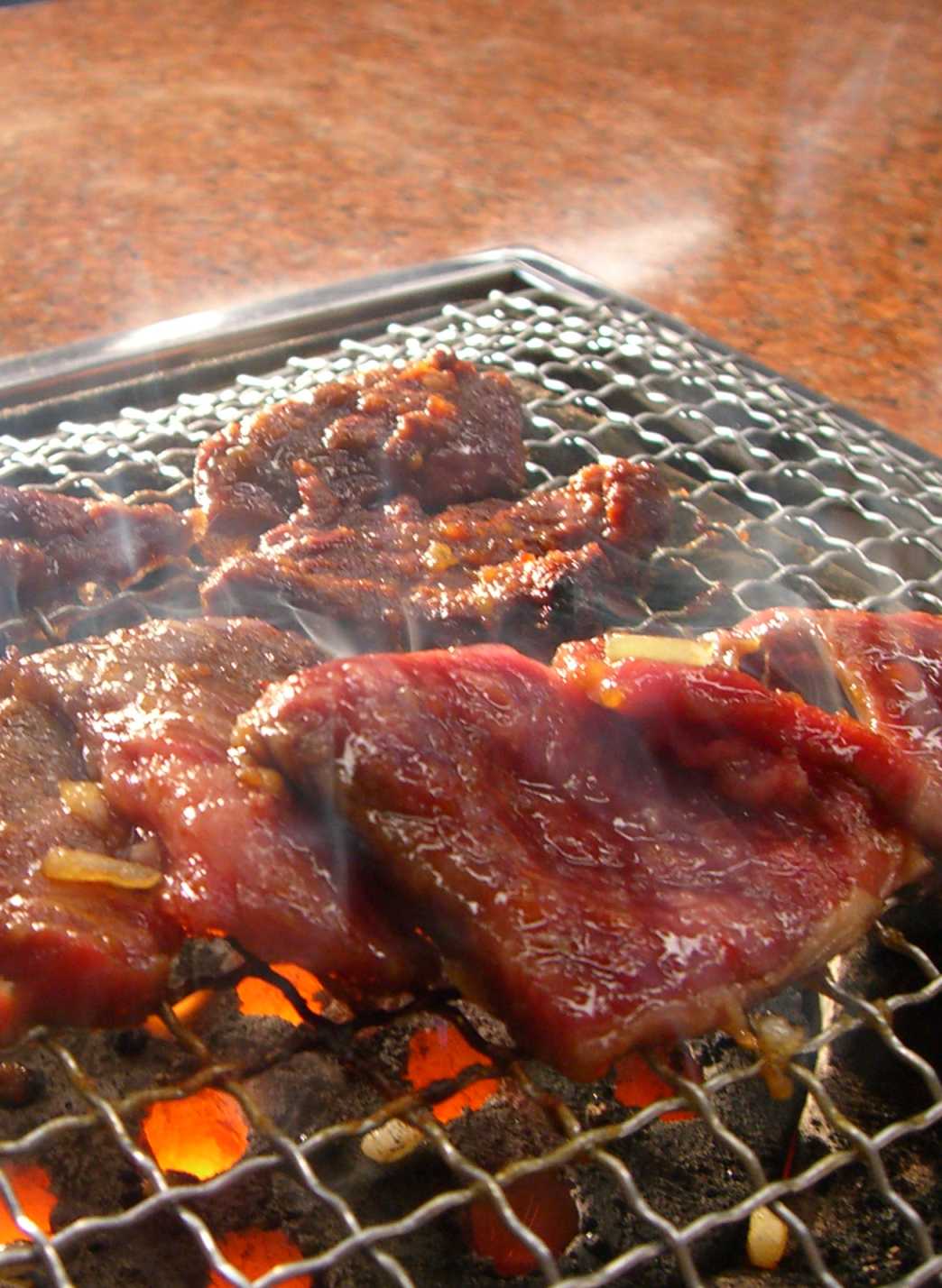
You may be able to order this dish at 焼肉 (yakiniku, "grilled meat", 불고기, bulgogi) BBQ restaurants, but your best bet, of course, is to find a restaurant that specializes in this dish. The broth is key.


Share |